LinkedIn definitely stands out for the unique objective it serves within the social media ecosystem. Unlike other social media platforms that cater to the entertainment requirements of users, LinkedIn serves people with purpose. Anyone serious about using LinkedIn always uses it for a specific objective, such as to assess ideas, search for business partners, share wins and defeats in their career, share lessons learned, and make insightful judgments about who really knows what they are talking about.
This gives brands a space to speak with clarity and honesty without exaggerating their post but only sharing insights that are impactful enough to drive attention, build authority, and accelerate sales. It is exactly for this reason that LinkedIn marketing has emerged as an even more powerful force for B2B marketing.
However, this only answers “Should businesses use LinkedIn?” which is no longer the concern. The real question is “Are we using it right enough to turn visibility into authority, and authority into revenue?”
Let’s discuss everything about business marketing on LinkedIn in this blog.
Why LinkedIn Dominates the Business Space For Marketing?
Before getting to know anything about LinkedIn business marketing, it is essential to understand why marketing on LinkedIn is dominating the commercial world.
When it comes to B2B growth, LinkedIn stands apart for one primary reason: the people using it are already thinking about business or have an authority-building objective. Instead of scrolling to pass the time, they are investigating novel concepts, looking for more effective solutions, and considering possible partners. A sharp insight, a useful market observation, or a short case study does more than just generate likes. It shows prospects that you understand their challenges and can help solve them. That recognition often leads to messages, calls, and eventually, long-term business opportunities.
Brands that sell services, like consulting firms, SaaS companies, IT providers, HR and recruitment agencies, and digital marketing services, benefit the most because their buyers actively research expertise online before making decisions. When a business leader posts a lesson from a recent project or a marketer explains a trend shift, it builds trust. Without even making a sales pitch, they are showcasing their capability. This approach becomes a natural, silent form of selling where expertise speaks louder than ads.
Strategy First: The Foundation of LinkedIn Marketing
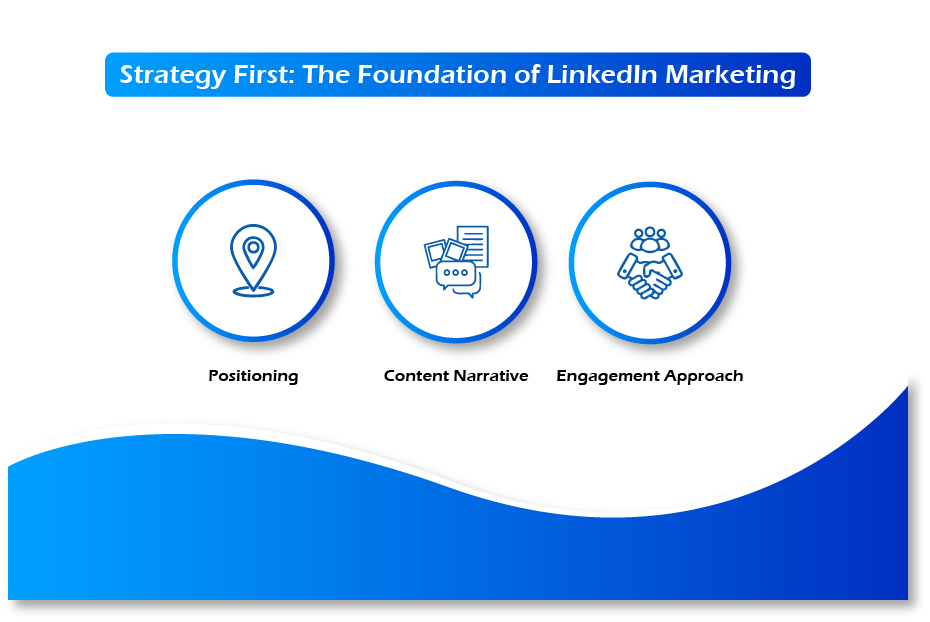
Brands often make the mistake of treating LinkedIn marketing for business as a posting routine instead of a positioning effort. Algorithms may influence reach, but mindset influences impact. An effective strategy begins with understanding that the goal is not to appear active; it is to appear valuable. A powerful LinkedIn B2B marketing strategy usually covers three elements:
1. Positioning
Clarify how your business solves problems. Profiles should read like landing pages: precise language, benefits upfront, outcomes highlighted.
2. Content Narrative
Build a consistent voice rather than recycled jargon. Strong voices spark recognition even without logos or templates.
3. Engagement Approach
Relationships deepen when brands interact meaningfully. Commenting thoughtfully, responding to discussions, and supporting peers embeds your presence naturally in the feed.
When these elements align, effective LinkedIn marketing strategies generate traction without feeling forced. The audience begins to expect your perspective, and your posts stop competing for attention; they command it.
What Should You Talk About?
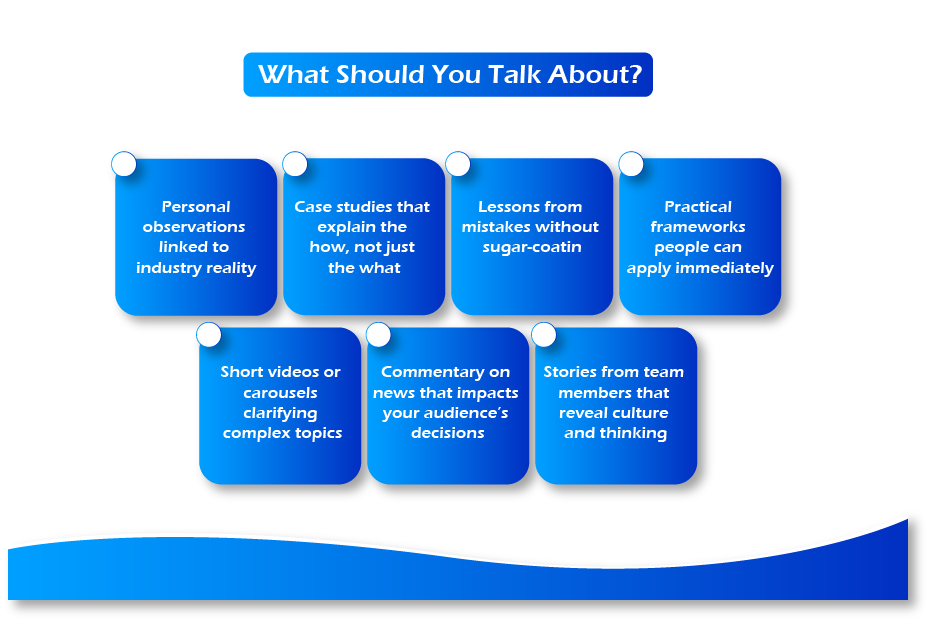
LinkedIn rewards clarity over volume. The question is not “How often can we post?” but “What can we contribute that genuinely matters?” In 2026, attention follows content grounded in experience, honesty, and usefulness.
Here are formats consistently proving their value in LinkedIn marketing:
- Personal observations linked to industry reality
- Case studies that explain the how, not just the what
- Lessons from mistakes without sugar-coating
- Practical frameworks people can apply immediately
- Short videos or carousels clarifying complex topics
- Commentary on news that impacts your audience’s decisions
- Stories from team members that reveal culture and thinking
The best content does not preach; it helps. It does not aim to impress; it aims to guide. When posts answer “Why should the audience care?”, they resonate far more deeply and contribute to sustained engagement, cornerstones of LinkedIn for marketing success.
A Strategic Approach For LinkedIn Marketing As a Business
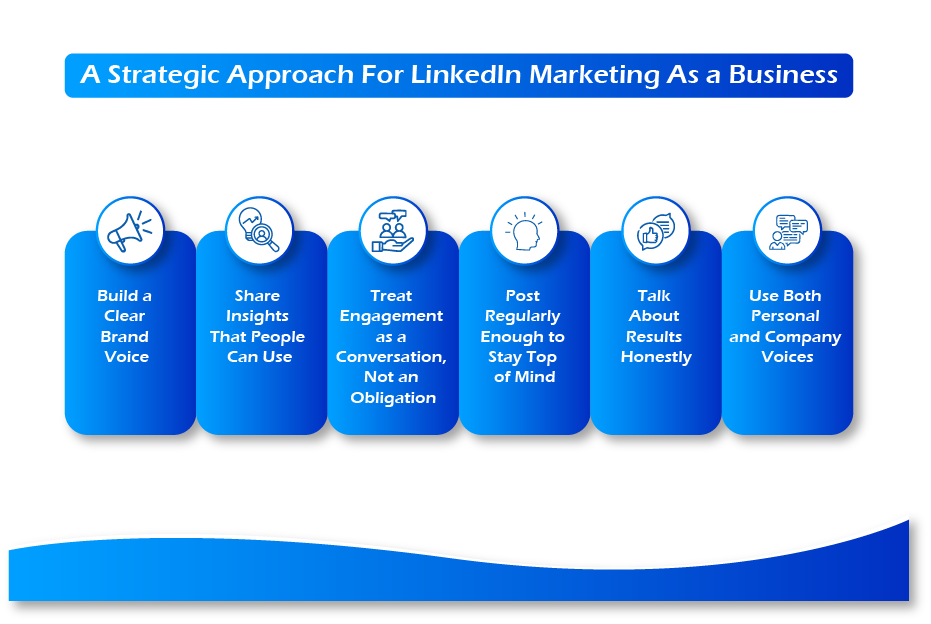
Most businesses understand that LinkedIn matters, but many still struggle to communicate in a way that feels consistent and convincing. The brands that grow here do not rely on luck; they follow practical habits that turn visibility into real interest. Here are approaches that make a noticeable difference:
1. Build a Clear Brand Voice
Decide how you want to sound: helpful, analytical, bold, or conversational, and stick to it. When your tone stays consistent, people recognize your posts even before seeing your name.
2. Share Insights That People Can Use
Do not repeat statistics that everyone has already seen. Explain what those numbers mean for your audience. Content that helps people think differently is far more memorable than content that simply states facts.
3. Treat Engagement as a Conversation, Not an Obligation
Comment with purpose; add context, share experiences, or ask thoughtful questions. Authentic engagement strengthens relationships and keeps your brand visible beyond your own posts.
4. Post Regularly Enough to Stay Top of Mind
You do not need to publish daily, but disappearing for weeks reduces your reach. A steady rhythm, several posts each week, and small daily interactions keep you relevant.
5. Talk About Results Honestly
Share wins, but also explain how they happened. Case studies, lessons learned, and project summaries help prospects understand what working with you/for a particular objective or in a particular role actually feels like.
6. Use Both Personal and Company Voices
A brand page builds credibility, but personal profiles build trust. When leadership and team members share perspectives alongside official updates, your presence feels human and complete.
These actions may look very specific, yet the brands that consistently apply them are the ones people remember. Over time, this discipline turns content into a relationship with your audience, and those relationships into business opportunities.
Measuring Authoritative Impact Beyond Numbers
To many brands, follower count feels like the primary measure of performance. Yet, numbers alone prove nothing if they do not contribute to conversions or influence. An intelligent LinkedIn B2B marketing strategy focuses on qualitative feedback: direct messages from prospects, profile visits from relevant industries, repeat engagement from senior decision-makers, and website traffic driven by content.
Tracking these indicators clarifies what works and what requires refinement. Over time, this feedback loop transforms posts into business outcomes.
Ultimately, the strength of LinkedIn marketing rests in purposeful communication. Every post should either educate, inspire, challenge assumptions, or document learnings. When that intention becomes consistent, brands naturally stand out.
Final Words
LinkedIn has become a marketplace of ideas, an ecosystem of opportunities, and a space where relevance is earned through perspective, not pressure. Businesses that commit to consistent storytelling, thoughtful engagement, and strategic positioning soon realize the power of social media marketing executed in a professional environment.
For brands that want to build authority, attract qualified leads, and establish a strong narrative through LinkedIn marketing, expert guidance makes all the difference. Hence, Soluzione is your one-stop solution to build, grow, and dominate with an influential presence in the professional digital environment. We support organizations at every step, whether refining their messaging, structuring a scalable LinkedIn marketing service, or aligning content with long-term brand vision.
If your business is ready to strengthen its presence, deepen industry credibility, and leverage LinkedIn’s potential with confidence, Soluzione ensures you do not just show up on the platform, but you stand out. Wondering how? Connect now with our experts to know more!
Read More: https://www.solzit.com/blog/
Frequently Asked Questions:
What types of businesses benefit most from LinkedIn marketing?
Service-oriented, knowledge-intensive enterprises, including cloud-based software companies, management and strategy consultants, IT services firms, ad agencies, HR and recruitment agencies, financial services companies, manufacturing component suppliers, and enterprise solutions companies, experience the highest ROI because their buyers use LinkedIn to find partners for their projects.
What content performs best on LinkedIn in 2026?
In 2026, authoritative content ranks: founder insights, expert opinions, strategic breakdowns, case studies showing actual results, explainers of industries, behind-the-scenes stories, commentary on market trends, bite-sized education carousels, and leadership video clips. Content that starts a discussion rather than makes a statement increases visibility.
How can companies generate high-quality leads through LinkedIn?
Companies can generate qualified leads by combining consistent thought leadership with targeted outreach, optimized company and personal profiles, audience-driven content, strategic commenting, and lead magnets like webinars, whitepapers, or case studies. Engagement that educates first and sells later converts better than direct sales messaging.
What KPIs should be tracked for successful LinkedIn marketing campaigns?
Track metrics tied to business outcomes, not vanity numbers: profile views from target industries, inbound inquiries, connection acceptance rate, comment quality, direct messages from prospects, CTR to key landing pages, content saves/shares, lead conversion rate, and revenue attribution from LinkedIn interactions.
How often should businesses post on LinkedIn for the best results?
Posting three to five times per week on personal profiles and one to two times per week on company pages maintains visibility without overwhelming the audience. Consistency matters more than frequency; regular engagement in comments enhances impact even on non-posting days.
How can LinkedIn marketing support employer branding?
Employee stories, culture-based posts, leadership insights, internal achievements, and transparent workplace communication shape brand perception and attract quality talent. When employees and leadership share consistent narratives, LinkedIn becomes a recruitment funnel that showcases values, work environment, and growth opportunities without traditional hiring ads.