Distribution companies handling flyer, leaflet, or pamphlet distribution deal with real, everyday challenges to run the business operations smoothly. Every day, there are hundreds or thousands of flyers to distribute, crews to assign across neighborhoods or high-traffic areas, shifts to plan, last-minute changes to handle, and clients asking for proof that every leaflet actually reached its target.
Normally, distribution companies handle this all with spreadsheets, phone calls, WhatsApp updates, and paper reports, but as business grows and work increases, gaps start to appear.
This is why an advanced distribution management system or tracking system is designed. They help businesses plan routes, assign and reassign crews, track field staff in real time, manage shifts, and generate reliable reports for clients.
But are distribution tracking systems just a convenience, or are they truly essential for modern distribution businesses? Let’s figure it out in this blog.
What is a Distribution Tracking System, And How Does It Work?
A distribution tracking system is a digital system designed to help distribution businesses plan, manage, track, and report field distribution work in real time. It gives flyer distribution companies visibility into who is distributing, what, where, when, and how efficiently. So the core tasks, such as coordination through Excel sheets, WhatsApp messages, and paper reports, are replaced with a single, structured system built combining shift scheduling, crew management, and field staff tracking software solutions.
These pamphlet or leaflet distribution management software solutions help with:
- Planning distribution areas and routes into clear zones, ensuring no neighbourhoods or high-traffic areas are missed or duplicated.
- Assigning and reassigning crews even at the last moment to avoid delays.
- Tracking field staff in real time using GPS-enabled field staff tracking software within the system.
- Managing shifts and schedules with built-in shift planning software.
- Collecting proof of distribution with a mobile app capturing location data, timestamps, photos, or completion status.
- Adding reviews, feedback, and generating clear reports automatically.
Why Distribution Tracking System Essential for Modern Distribution Businesses?
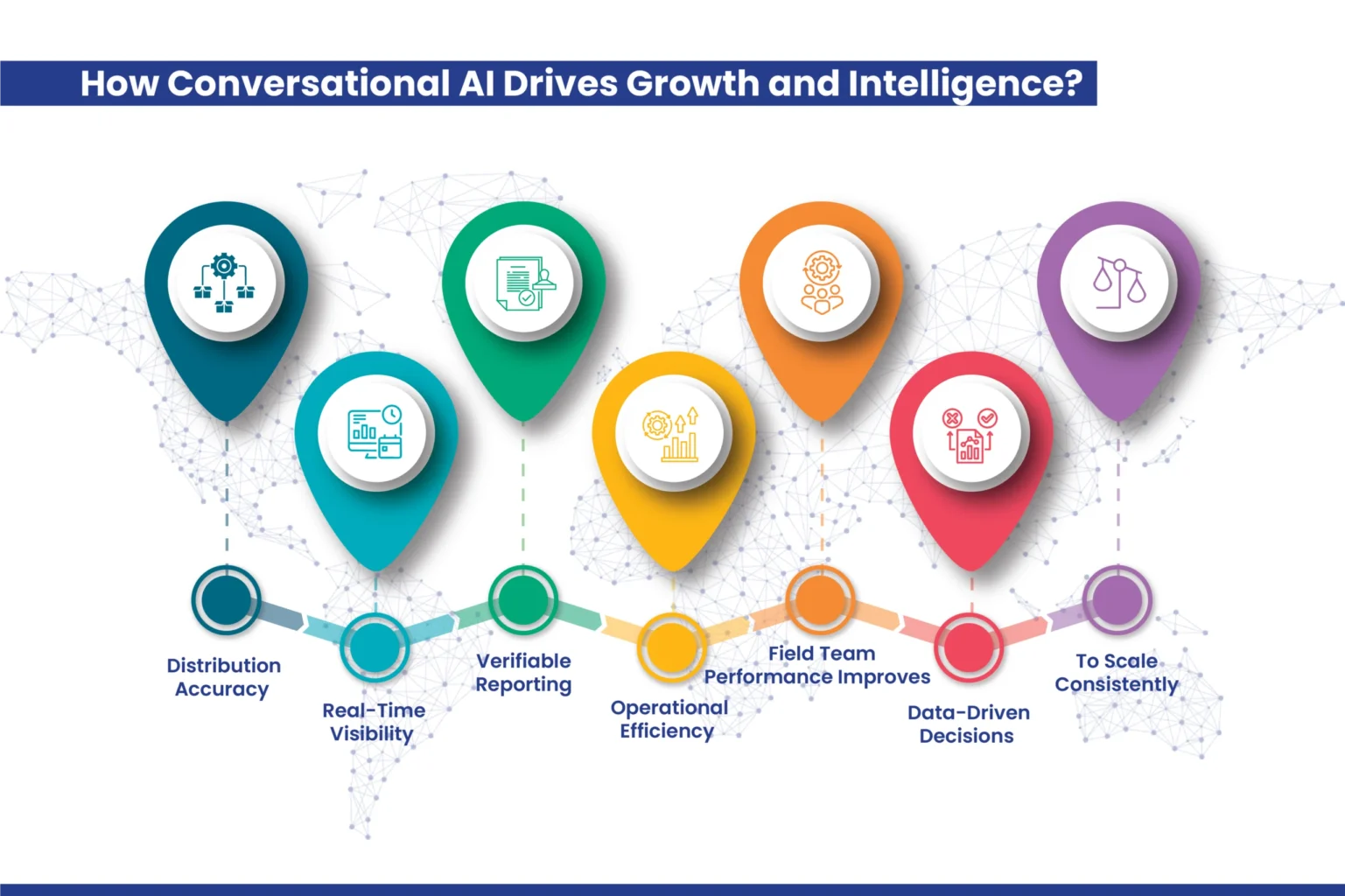
Modern distribution businesses are no longer judged only by how many flyers are distributed, but by how accurately, transparently, and consistently they execute campaigns. And advanced distribution management systems (DMS) are adopted to support these activities, address operational complexity, and meet raised customer expectations. And here are more reason why one need such systems for modernizing the distribution businesses:
1. Distribution Accuracy
In flyer and leaflet distribution, coverage accuracy is everything. Missed streets, overlapping routes, or uneven area coverage directly impact campaign effectiveness—but these issues are hard to detect when planning and reporting rely on manual processes.
Whereas a distribution tracking system introduces structure into:
- Area zoning and route definition
- Crew-to-zone alignment
- Completion validation
This ensures every assigned area is covered once and correctly. Over time, this level of accuracy becomes a competitive differentiator, especially for clients running repeat or large-scale campaigns.
2. Real-Time Visibility
Traditional distribution workflows operate reactively. Problems surface after the campaign ends—when it’s too late to fix them without rework or client dissatisfaction. In modern distribution businesses, visibility equals control, and control directly impacts delivery quality. A tracking system changes this dynamic, so managers can intervene timely manner, by offering real-time visibility into:
- Crew movement and progress
- Area completion status
- Delays or deviations as they happen
3. Verifiable Reporting
Manual reports and verbal updates no longer hold up, especially when clients are paying more for a distribution campaign, the target area is large, and to pay distributors, teams need measurable accountability.
A distribution tracking system creates a clear reporting layer—timestamps, location data, completion logs—that replaces assumptions with facts. This transparency not only reduces disputes but also strengthens long-term client relationships and renewals.
4. Operational Efficiency
As distribution businesses grow, relying on more supervisors, more calls, and more follow-ups becomes unsustainable. Human coordination does not scale cleanly. Tracking systems introduce repeatable processes for shift planning and changes, crew allocation, and field execution monitoring.
Instead of increasing management overhead, businesses gain efficiency through process standardization. This allows teams to handle higher volumes without proportional increases in operational chaos.
5. Field Team Performance Improves
One overlooked benefit of distribution-tracking systems is how they impact field teams. When expectations are unclear, even good work gets questioned. With a structured system:
- Distribution zones are clearly defined
- Completion criteria are objective
- Performance is measured consistently
This reduces friction between managers and crews, improves accountability, and creates a more professional working environment—especially important for businesses operating across multiple locations or teams.
6. Data-Driven Decisions
Without structured data, distribution businesses rely on manual analysis to figure out which areas take longer, which crews perform better, and where delays typically occur. While a tracking system captures this data automatically, enabling businesses to:
- Improve route planning
- Optimize crew deployment
- Refine timelines for future campaigns
Over time, this data becomes a strategic asset—helping businesses plan smarter, price more accurately, and deliver more predictably.
7. To Scale Consistently
Growth exposes weaknesses in manual workflows more quickly, increasing the complexity of maintaining service quality as the business scales. What works for one city or one client often collapses under multi-location operations.
Distribution tracking systems provide the scalability needed to:
- Manage multiple campaigns simultaneously
- Maintain consistency across regions
- Handle higher volumes without operational breakdowns
- Tools, Mobile Apps, and software solutions under one platform for growth
Modernize Distribution Management with DistributionDesk
When businesses plan to modernize their leaflet and flyer distribution operations, they don’t need to invest in separate tools such as crew management software, field staff tracking solutions, or shift scheduling software. Not only does it impact their budget, but it also needs multiple training sessions to ensure all work in sync with the required data.
To address this, Soluzione has built DistributionDesk (DD), which has capabilities and functionality most distribution businesses need. It brings route planning, crew assignment, shift management, real-time field tracking, and proof of distribution into one system. With DD, managers and internal teams know what’s happening in real-time, what is planned, what is canceled – so they can respond, rearrange, and replace accordingly.
If your business is ready to move beyond manual coordination and scattered tools, DistributionDesk offers a practical starting point. A single demo is often enough to see how a controlled, trackable distribution can change day-to-day operations. Contact us to know more.
Read More: https://www.solzit.com/blog/
Frequently Asked Questions
Can a distribution tracking system reduce disputes and service conflicts?
Yes, significantly. Most disputes in distribution don’t happen because work wasn’t done—they happen because it can’t be clearly proven. A distribution tracking system records objective data such as timestamps, locations, and completion status. This removes dependence on verbal explanations or manual confirmations.
How do GPS and geo-fencing features improve distribution accuracy?
GPS tracking shows where distribution staff are operating in real time, while geo-fencing ensures they remain within assigned zones. Both functionalities prevent overlapping coverage, disrupt efficiency, miss street tracking, and distribution outside planned areas. Also, they provide reliable assurance of campaign execution, improve relevance at the location level, and allow managers to identify and address issues immediately if work deviates from the plan.
How do distribution tracking tools support workforce and shift management?
Distribution tracking tools connect shift schedules directly with field execution. Managers can see which crews are active, which shifts are completed, and where capacity gaps exist.
This makes it easier to:
- Reassign staff during no-shows or delays
- Balance workloads across teams
- Plan future shifts based on actual performance data
Instead of managing shifts in isolation, workforce planning becomes part of the overall distribution workflow.
Can a distribution tracking system integrate with CRM or billing systems?
Yes, most modern distribution tracking systems are designed to integrate with CRM, billing, or reporting tools.
What role do mobile apps play in modern distribution tracking?
Mobile apps make everything handy for distribution businesses, from planning, managing, to execution, tracking, and reporting. Field staff use them to receive assignments, follow routes, mark completion, and submit proof of distribution directly from the ground. For managers, mobile apps ensure real-time visibility through geo-tracking without constant calls or messages. For field teams, they provide clear instructions and reduce confusion. This makes distribution more consistent, traceable, and easier to manage—especially across large teams or multiple locations.