The mobile application ecosystem has undergone a drastic transformation in the last decade, evolving from simple, utility-based apps to intelligent, interactive solutions that understand and respond to users in real-time.
One of the root causes behind this transformation is the integration of AI and chatbots in mobile applications, which is emerging as a central driver of modern innovation. Businesses across industries are increasingly investing in chatbot app development to elevate customer experiences, streamline operations, and create scalable digital solutions that resonate with modern users.
In fact, research conducted by Senson Tower indicates that, “In Q4 2024, downloads in the AI Chatbot subgenre rose ~119% year-over-year, reaching ~427 million downloads in that quarter.”
Nevertheless, the number of market-preferred and downloaded AI and chatbot-integrated mobile applications is routing the benchmark in the digital industry, but why has this tech innovation become crucial all of a sudden? Or is this a strategic roadmap for what the future applications would look like?
Untangling all these factors, this blog explores how AI and chatbots have transformed mobile app development, and how these two are becoming the primary thriving factors for business in the digital market.
The UX Factor: How AI & Chatbots are Transforming Mobile Applications
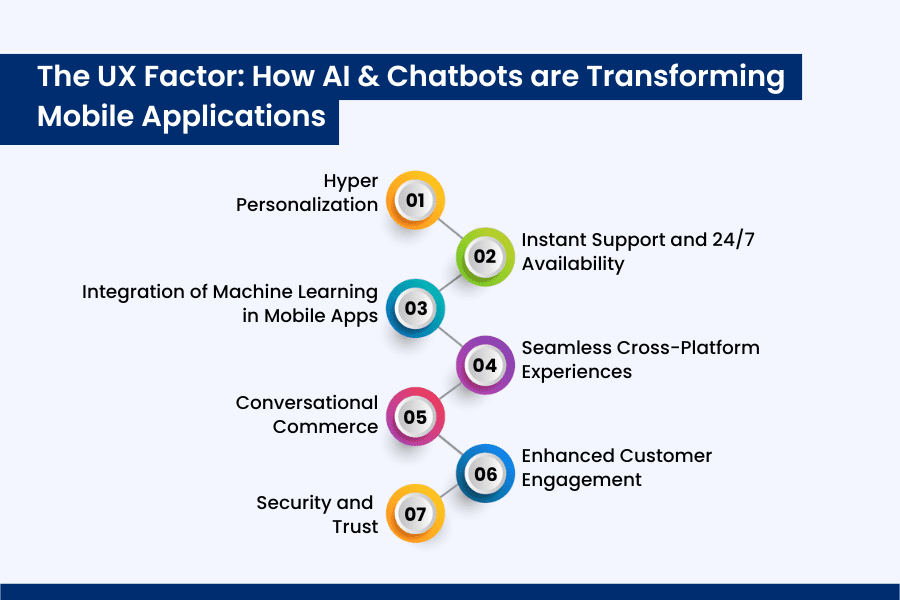
Interface augmentation, improved features, enhanced application efficiency, pleasing customer support with reduced manual hassle, AI & Chatbots are redefining how mobile applications elevate user experience. Here are some primary factors to understand this improvisation:
1. Hyper Personalization:
Modern users expect apps to recommend what they want to see and behave the way they want to navigate it, and not just a random platform with a complicated interface. AI-powered chatbots play a crucial role in this shift.
A. Data-Driven Insights
- Behavioral Analysis: AI tracks user clicks, time spent on features, and browsing journeys. For example, a music app might suggest playlists based on your past listening patterns.
- Contextual Awareness: Chatbots adjust recommendations depending on factors like location or time of day (e.g., suggesting lunch deals around noon).
B. Predictive Analytics
- Anticipating Needs: By studying historical data, apps can predict what users might want next, such as a fitness app suggesting recovery stretches after intense workouts.
- Reducing Decision Fatigue: Personalized recommendations enable users to make faster, easier choices, thereby improving satisfaction and engagement.
C. Conversational Personalization
- Dynamic Tone: Some advanced chatbots adapt to a user’s language style based on their profiles and conversational context. For example, a finance app might maintain a formal tone, while a lifestyle app may adopt a casual tone.
- Ongoing Learning: AI & Chatbots learn from constant interactions and adapt to fine-tune personalization for future conversations.
2. Instant Support and 24/7 Availability
Who in the fastest-moving world likes to wait? Addressing this customer’s pattern, chatbots in mobile applications provide instant, real-time assistance to users. It helps businesses with:
A. Support Scalability
- Handling Volume Customer Interaction: Chatbots can handle very high volumes of conversations simultaneously when supported by a scalable cloud infrastructure, ensuring users don’t experience delays.
- Consistent Service: Each customer receives the same high-quality assistance as any other user. This ensures consistent service to all the application visitors without any biased preferences.
B. Cost Efficiency
- Reduced Overhead: Businesses save on customer support staff while improving service quality. This doesn’t mean that AI & Chatbots replace human force; instead, they empower them with effective operations that businesses would have invested in to enhance their working efficiency.
- Focus on Complex Issues: Human agents are freed up to resolve unique or high-value problems.
C. Accessibility Across Platforms
- Cross-Platform Consistency: Chatbots integrated during cross-platform app development ensure a consistent experience across all platforms, including iOS, Android, and web apps.
- Multi-Language Support: Many AI chatbots now include multi-language capabilities through translation engines, making them more accessible globally. Unlike previously designed applications with only two language preferences (English/local language), applications with AI & Chatbot integration offer multi-language convenience to the user regardless of their region.
3. Integration of Machine Learning in Mobile Apps
Machine learning in mobile apps elevates chatbots from scripted responders to adaptive assistants. This means that AI in mobile applications helps backends and businesses better understand users’ contexts and offer services accordingly.
A. Contextual Understanding
- Past Interactions as Memory: Chatbots recall previous conversations, avoiding repetitive questioning, and utilize them for further interaction with the user.
- Real-Time Adjustments: Bots make adjustments to responses mid-conversation based on new customers’ input or mood.
B. Behavioral Adaptation
- User Preferences: Chatbots learn tone preferences, such as how users prefer to interact. For example, many prefer concise tonality, while others prefer elaborative.
- Sentiment Analysis: Some chatbots use sentiment analysis to detect frustration or dissatisfaction and attempt empathetic responses. In more advanced setups, they may escalate the case to human support when needed.
C. Risk Management
- Fraud Detection: Finance apps utilize machine learning in cross-platform applications to identify unusual spending patterns.
- Data Protection: Suspicious login activity triggers instant chatbot-led verification, helping businesses identify and prevent anomalies and scams.
4. Seamless Cross-Platform Experiences
Users demand uninterrupted transitions across devices. Chatbots & AI in mobile app development allow developers to create applications that deliver a uniform user experience across platforms. Cross-platform mobile application development offer:
A. Continuity Across Devices
- Session Transfer: With proper backend integration and cloud sync, a chatbot can continue conversations across devices, ensuring users don’t lose context when they switch platforms.
- Shared History: Browsing or cart activity syncs instantly across platforms.
B. Unified Data Management
- Single Source of Truth: Centralized databases ensure chatbot recommendations remain consistent.
- Personalization Sync: Data collected on one device enhances experiences across all.
C. Reduced Development Burde
- Framework Reusability: Developers utilize a single codebase for multiple platforms. AI in cross-platform app development has enabled businesses to create high-quality websites with exceptional features, using a single framework.
- Faster Rollout: Businesses can reach a broader audience sooner with chatbot-enabled cross-platform app development.
5. Conversational Commerce
Shopping is moving away from manual browsing to guided buying through chatbots. Today, people prefer interactive applications that could understand consumer preferences, as any shopping assistant would have done if they had visited a showroom. Furthermore, conversational commerce is applicable in various industries, including finance, lifestyle, fitness, healthcare, and others. AI and chatbots enhance the operational efficiency of mobile applications, enabling conversational commerce with a superior experience.
A. Personalized Product Suggestions
- AI Recommendations: Bots analyze purchase history for tailored suggestions.
- Bundled Offers: Chatbots propose combos (e.g., shoes with matching accessories). This helps users buy products according to their preferences and personalized suggestions that align with their shopping behavior.
B. Seamless Transactions
- In-Chat Checkout: In some apps, chatbots enable in-chat checkout by integrating with secure payment gateways, allowing transactions without leaving the conversation window.
- Order Tracking: Bots provide live delivery updates in a conversational manner.
C. Sales Optimization
- Upselling: Recommending premium versions of products.
- Cross-Selling: Suggesting complementary goods (e.g., chargers with smartphones).
D. Multilingual Voice-Enabled Search
- While navigating regular applications is a hassle in itself, AI in mobile applications enables multilingual voice search, allowing users to search with ease. This enhances customer experience by enabling mobile applications to be more interactive and user-friendly.
6. Enhanced Customer Engagement
AI chatbots make apps “sticky,” encouraging long-term interaction. This means that AI-powered chatbots in mobile application development enhance customer engagement with the application, thereby increasing customers’ interest in the product or service.
A. Gamified Interactions
- Challenges & Rewards: Bots create personalized streaks or badges.
- User Motivation: Rewards encourage higher app usage.
B. Smarter Notifications
- Contextual Alerts: A food app chatbot notifies you of dinner deals at dinner time, not breakfast.
- Personalized Messaging: Notifications use the user’s name and purchase history to feel relevant.
C. Feedback Integration
- Instant Surveys: Bots collect real-time opinions after service use.
- Actionable Insights: Feedback data informs mobile application development cycles.
7. Security and Trust
Security is non-negotiable in mobile apps, particularly when handling financial or health data. AI-powered chatbots, secure applications with encrypted data, and stringent security. It offers:
A. Multi-Layer Verification
- Biometric Integration: Facial recognition or fingerprint ID during chatbot-led authentication.
- Two-Factor Authentication: Bots remind users to verify when unusual activity occurs.
B. Fraud Prevention
- Pattern Analysis: ML spots irregular activity, such as sudden high-value purchases.
- Real-Time Alerts: Chatbots immediately notify users, reducing risks.
C. Privacy Assurance
- Encrypted Conversations: Ensures the confidentiality of user-bot communication.
- Compliance Ready: When designed with compliance in mind, chatbots can align with GDPR or HIPAA standards, ensuring secure handling of sensitive data.
With this set of features and experiences, AI & Chatbots aim to elevate not only user experience, but also how a startup or a multinational enterprise interacts with its audience. Undoubtedly, the future will see further innovation in AI and technology, including AI-integrated IoT-enabled ecosystems, enhanced AR+AI integration, and more. Businesses that do not adapt to this innovative evolution will struggle to sustain themselves in the market, but those who match the pace will definitely thrive.
The Takeaway:
The combination of AI and chatbots has already begun rewriting the rules of mobile app development. From hyper-personalized user journeys to enhanced security and global availability, the transformation is widespread and unstoppable.
For businesses, investing in chatbot app development services today means securing a competitive edge tomorrow. By partnering with the right mobile app development company, such as Soluzione, that integrates AI and chatbots, businesses can implement scalable, intelligent, and adaptable solutions that drive growth.
As the role of machine learning in mobile apps grows and the boundaries of cross-platform app development expand, chatbots will become the key drivers of the digital industry and how businesses interact with their customers in the future.
Read More: https://www.solzit.com/blog/
FAQs:
What benefits do AI-powered chatbots bring to mobile applications?
AI-powered chatbots can incorporate features such as automated messaging, personalized recommendations for customers, voice-enabled search, enhanced UI/UX, robust security functionality, and other advanced capabilities, tailored to the specific needs of different businesses and their respective niches.
Can chatbots in mobile apps understand multiple languages or tones?
Yes, many chatbots support multiple languages through translation engines. While some advanced systems adjust their response style for context, full ‘tone detection’ is still in the process of evolving.
What’s the difference between rule-based and AI-powered chatbots?
Rule-based chatbots rely on predefined norms, guided conversation, and added information to answer pre-dictable queries. Whereas AI-powered chatbots use Natural language processing (NLP) to understand the user’s query, analyze their search pattern and context, and offer a dynamic result for their search query.